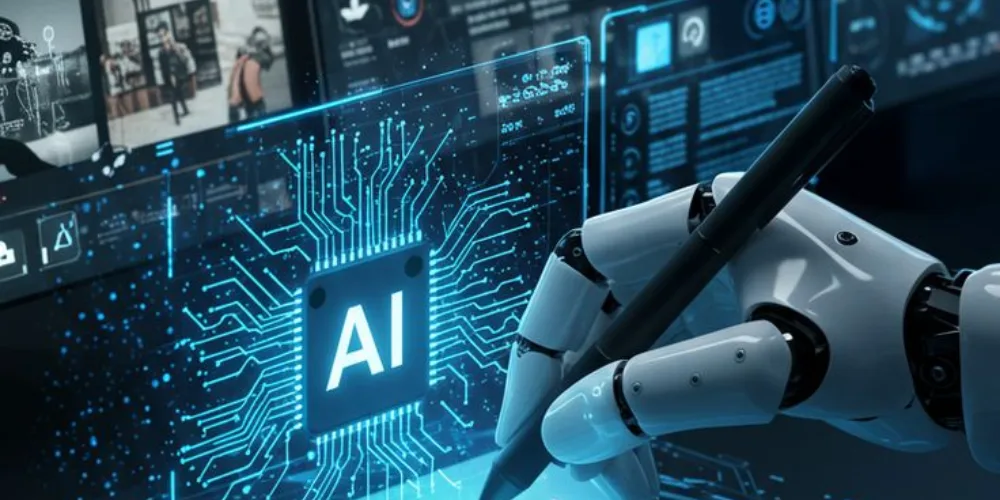
Introduction: The Dawn of a New Business Era
In today’s rapidly evolving digital landscape, Artificial Intelligence (AI) has emerged as a transformative force. From enhancing customer experiences to automating complex operations, AI is revolutionizing how businesses function. Whether you’re a startup founder or a corporate leader, understanding the potential of AI in business is no longer optional—it’s essential.
In this blog, we explore how Artificial Intelligence is shaping industries, streamlining operations, and driving growth across sectors. We’ll also touch upon practical applications, real-world examples, and future trends.
What is Artificial Intelligence (AI)?
Artificial Intelligence (AI) refers to the simulation of human intelligence in machines. These machines are designed to think, reason, learn, and adapt—mimicking cognitive functions such as problem-solving, decision-making, and pattern recognition.
There are three main types of AI:
- Narrow AI (e.g., voice assistants like Alexa)
- General AI (equal to human intelligence, still theoretical)
- Superintelligent AI (beyond human capacity, future concept)
Why Businesses Are Adopting AI
Businesses are integrating AI technologies to:
- Automate repetitive tasks
- Improve customer service
- Predict consumer behavior
- Personalize marketing strategies
- Detect fraud and anomalies
- Optimize supply chain logistics
A study by PwC suggests that AI could contribute up to $15.7 trillion to the global economy by 2030. That’s reason enough for businesses to pay attention.
Key Benefits of Artificial Intelligence in Business
1. Increased Efficiency
By automating mundane tasks, AI in business boosts operational efficiency. Tasks like data entry, scheduling, and inventory tracking can be handled 10x faster with AI.
2. Better Customer Insights
With AI-powered analytics, businesses can track customer behavior, segment audiences, and tailor experiences in real-time.
3. Cost Reduction
AI reduces the need for human intervention, leading to significant cost savings over time—especially in manufacturing, finance, and logistics.
4. 24/7 Availability
Unlike humans, AI systems like chatbots and virtual assistants never sleep. They provide round-the-clock service, improving customer satisfaction.

Use Cases of AI Across Industries
Retail
AI helps personalize shopping experiences by analyzing purchase history, predicting preferences, and optimizing inventory.
Healthcare
In healthcare, Artificial Intelligence assists in diagnostics, drug discovery, and even robotic surgeries.
Finance
Banks and fintech companies use AI for fraud detection, credit scoring, and personalized financial advice.
Manufacturing
AI-driven robots, predictive maintenance, and supply chain automation increase output and reduce downtime.
Marketing
AI in marketing enables programmatic ad buying, content recommendations, and consumer trend analysis.
How Startups and SMEs Can Use AI
You don’t need to be a tech giant to harness the power of AI in business. Here are simple ways small businesses can get started:
- Use AI chatbots for customer support
- Implement AI-powered CRMs like Salesforce or HubSpot
- Leverage email marketing automation tools that use AI for optimal timing and content personalization
- Use AI analytics tools like Google Analytics or Hotjar to understand visitor behavior
Challenges in Implementing AI
Despite the benefits, businesses may face hurdles such as:
- High implementation costs
- Lack of skilled workforce
- Data privacy concerns
- Integration with legacy systems
The key is to start small and scale gradually.
The Future of Artificial Intelligence in Business
Here’s what the next few years could bring:
- Hyper-personalization in e-commerce
- AI-generated content and marketing campaigns
- AI-assisted hiring and HR analytics
- Edge AI—processing data locally on devices
- Explainable AI (XAI) for transparency in decision-making
The possibilities are nearly limitless.
Conclusion
Artificial Intelligence (AI) is no longer science fiction—it’s a game-changing reality. Businesses across every sector are using AI to gain competitive advantage, reduce costs, and innovate faster than ever. Whether it’s through chatbots, automation tools, or smart analytics, integrating AI in business strategy is key to thriving in the digital age.
If your business hasn’t started exploring AI yet, the time to act is now.
Read Latest Blogs