For something that affects so many of us, fertility has spent a remarkably long time being discussed in whispers.
We talk more openly than ever about mental health, menopause and women’s wellbeing, yet fertility and family building can still feel curiously difficult to bring into everyday conversation, particularly at work. Behind the appointments, treatments and clinical terminology are real lives being lived: careers to manage, relationships to protect, financial decisions to make and emotions that rarely observe office hours.
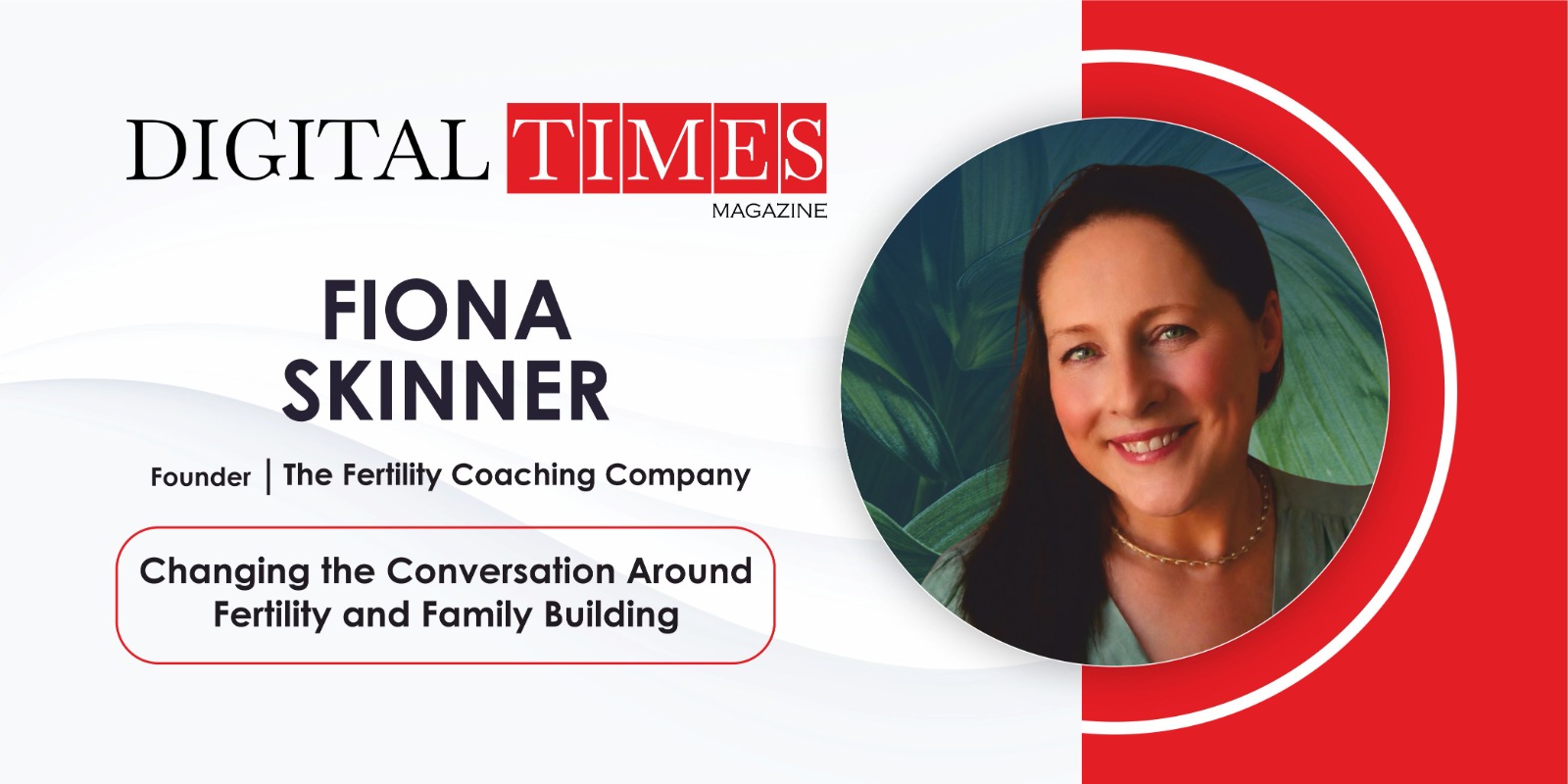
Fiona Skinner understands that reality more intimately than most.
As Founder of The Fertility Coaching Company, she has turned an extraordinary personal journey into a mission to improve the way individuals, families and employers approach fertility and family building.
It is a business built not simply on professional expertise, but on lived experience, and on Fiona’s conviction that nobody should have to navigate one of life’s most significant journeys feeling entirely on their own.
When the Personal Becomes a Purpose
Fiona’s career did not begin in fertility.
For more than two decades, she worked in the global advertising industry, holding senior communications and business leadership positions, including Business Director roles at leading international agencies. She managed major client accounts, developed commercial strategies and led high-performing teams in demanding corporate environments.
It was excellent preparation for entrepreneurship: understanding people, building relationships, solving problems and remaining composed when several people simultaneously describe something as “urgent”.
But while Fiona’s professional life was progressing, her personal life took a very different turn.
She experienced infertility in her late twenties and subsequently froze her remaining eggs. More than 20 of those eggs were later destroyed as a result of negligence at a UK fertility clinic.
Fiona challenged the clinic and became one of the first individuals in the UK to successfully take legal action against a fertility provider.
Her journey to motherhood continued through IVF and surrogacy, both in the UK and overseas, before she eventually became a mother through surrogacy in Georgia.
Then, in 2022, another extraordinary challenge emerged. When war broke out in Ukraine, Fiona’s second child was due to be born there. She went on to co-found one of the UK’s largest support groups for intended parents whose babies were caught up in the conflict, helping families navigate an extraordinarily frightening and complex situation and reunite safely with their children.
These experiences changed not only Fiona’s life, but also her understanding of what fertility support really needs to encompass.
Fertility Doesn’t Stay in the Clinic
One of the clearest lessons from Fiona’s experience was that fertility is never simply a medical matter.
“Fertility isn’t just a medical issue; it’s emotional, financial, and often incredibly isolating,” she says.
There may be medical appointments and treatment plans, but around them sit relationships, work, finances, difficult choices and an emotional load that can be largely invisible to everyone else.
That invisibility can be particularly pronounced in the workplace.
Someone may be navigating fertility treatment, pregnancy loss, donor conception or surrogacy while simultaneously attending meetings, managing teams and responding to emails as though nothing unusual is happening.
The modern workplace has become considerably better at recognising that employees have lives beyond their job descriptions. Fertility, however, remains an area where many organisations are still finding their feet.
It was this gap that led Fiona to establish The Fertility Coaching Company in 2021.
Putting Lived Experience at the Centre
What distinguishes Fiona’s approach is the emphasis she places on lived experience.
The Fertility Coaching Company is founded on personal experiences of fertility and family building challenges.
For Fiona, that is fundamental.
“Our greatest strength is that our guidance comes from lived experience as well as professional coaching,” she explains.
There is, after all, no single version of a family-building journey.
People may experience infertility, IVF, pregnancy loss, surrogacy or donor conception. Their circumstances, relationships, finances and emotional responses will differ enormously.
The company’s role is therefore not to prescribe what someone should do, but to create an environment in which people feel understood and supported as they work through their own decisions.
Professional coaching is combined with first-hand understanding, something that can make an enormous difference when the subject is as personal as whether, and how, someone may become a parent.
Building a Business from Experience
Turning that purpose into a viable company required considerable resilience.
Fiona and co-founder Bryony Clark (who is a qualified counsellor herself) self-funded the business, invested their own savings and spent the first year without salaries while developing the company’s training platform and establishing its presence.
There was also the challenge of persuading people to share deeply personal fertility experiences without financial compensation, ensuring the company’s programmes represented the breadth and complexity of modern family building.
And, as most founders discover fairly quickly, having an important idea does not automatically cause clients to appear.
Fiona and Bryony spent long evenings developing the business and securing their first Corporate Client while simultaneously navigating first-time motherhood and a demanding corporate career.
She credits the support of her husband, family and friends with helping her through those early years. Today, seeing organisations invest seriously in fertility-inclusive policies, and seeing the difference those changes make to individuals, has made those sacrifices worthwhile.
What Meaningful Workplace Support Looks Like
The Fertility Coaching Company works with both individuals and organisations, offering coaching, workplace training, policy development and awareness programmes.
Importantly, it does not replace healthcare professionals or provide clinical advice.
Instead, its work focuses on the considerable territory that exists around clinical treatment: the emotional, practical and financial decisions people encounter as they navigate their family-building journey.
Through accredited life coaching, NLP-based coaching techniques and guidance informed by lived experience, clients are supported in understanding their options, navigating complex decisions and developing action plans around their individual goals.
For employers, the challenge is slightly different.
A fertility policy can be valuable, but only if employees feel comfortable enough to use it.
Creating a genuinely fertility-inclusive workplace therefore requires more than adding another PDF to the company intranet. It requires managers who understand the subject, conversations that can take place without embarrassment and a culture in which employees do not feel that acknowledging fertility challenges might somehow count against them professionally.
Bringing Technology and Humanity Together
Technology is also becoming an increasingly important part of Fiona’s vision.
Fiona is currently working with experts and researchers to develop an AI-powered fertility and family-building platform designed to bring professional coaching, lived experience, research, and community knowledge together in one accessible resource.
For a company whose foundations are so deeply human, the intention is not to replace personal support with technology.
It is to extend its reach.
“Technology, combined with human experience, has the potential to transform fertility support,” Fiona says.
Used thoughtfully, she believes technology can make reliable information easier to access and help people feel better equipped to make informed decisions about their reproductive health.
The human element, however, remains essential. Algorithms may be very good at organising information; empathy remains a rather more specialised skill.
Measuring the Impact That Matters
The company’s progress suggests that attitudes towards fertility in the workplace are beginning to change.
The Fertility Coaching Company has secured international clients and major corporate partnerships, including global law firm Addleshaw Goddard, while national and international industry awards have provided further recognition of its work.
An invitation to the House of Lords through Small Business Britain also offered Fiona a significant moment to reflect on how far the company, and the wider conversation around fertility support, has travelled.
Yet the achievements she values most are considerably more personal.
They are the individuals and families the organisation has helped as they navigate their own routes towards building a family.
For Fiona, commercial growth matters, but it is not the only measure of success. The real test is whether the work is making people’s lives better.
Making Fertility Support Part of Everyday Working Life
Looking ahead, Fiona wants The Fertility Coaching Company to become a leading platform for fertility and family-building support, bringing together expert coaching, technology and lived experience.
But her wider ambition reaches beyond the company itself.
She wants fertility support to become a standard part of workplace wellbeing.
That means moving away from stigma and silence and towards environments where conversations about fertility can happen with the same understanding increasingly afforded to other aspects of health and wellbeing.
For employers, this is not simply about being compassionate. It is about recognising the realities of the people who work for them.
For employees, it can mean no longer having to choose between maintaining professional appearances and acknowledging one of the most emotionally significant experiences of their lives.
Purpose Before Profit
Fiona’s experiences have also shaped her philosophy as an entrepreneur.
Her advice to aspiring founders is to begin with purpose rather than commercial ambition.
Fertility, she believes, is too complex to be addressed through isolated services alone. Meaningful support requires compassion, practical guidance and communities in which people can share experience and knowledge.
The same principle informs her approach to building a business: listen carefully to the people you hope to serve, understand what they genuinely need, and create solutions around real experiences.
It may not sound as glamorous as “disrupting an industry”, but it has the advantage of being considerably more useful.
Keeping Life and Leadership in Perspective
Away from work, Fiona’s choices reveal something of the experiences that have shaped her.
One of her favourite books is Peter Mayle’s Up the Agency, a light-hearted look at the personalities, egos and demanding clients of advertising life.
After more than two decades in the industry, some of its observations remain reassuringly familiar.
She also recommends Dr Gladys McGarey’s A Life Well Lived, particularly for its message that a meaningful life is measured not by wealth or status, but by the difference we make to others.
It is a philosophy that resonates strongly with Fiona’s own.
At home, home life is crazy, chaotic, but immensely fun with her two young daughters, time that allows her to step away from work and see the world through their eyes.
Travel is another source of joy, particularly family trips that venture beyond the most obvious tourist routes. For Fiona, the value lies not simply in where they go, but in the memories created along the way.
And through a career that has encompassed global advertising, infertility, legal action, IVF, international surrogacy, motherhood and entrepreneurship, one piece of advice has remained particularly important.
It came from her father:
“Be nice to people on the way up because you’ll meet them again on the way down.”
Simple, perhaps, but remarkably durable.
It has influenced Fiona’s approach to leadership, reinforcing the importance of humility, kindness, and treating people well regardless of circumstance.
And in many ways, it captures the philosophy behind the business she has built.
Fertility and family building can be complicated, unpredictable and profoundly personal. Nobody can remove all of that uncertainty.
But we can change the way people are supported while they experience it.
For Fiona Skinner, that means combining expertise with empathy, innovation with humanity, and professional ambition with a very clear sense of purpose.
And perhaps the most important change she is advocating is also the simplest: making sure that, whatever someone’s route to building a family looks like, they do not have to navigate it alone.