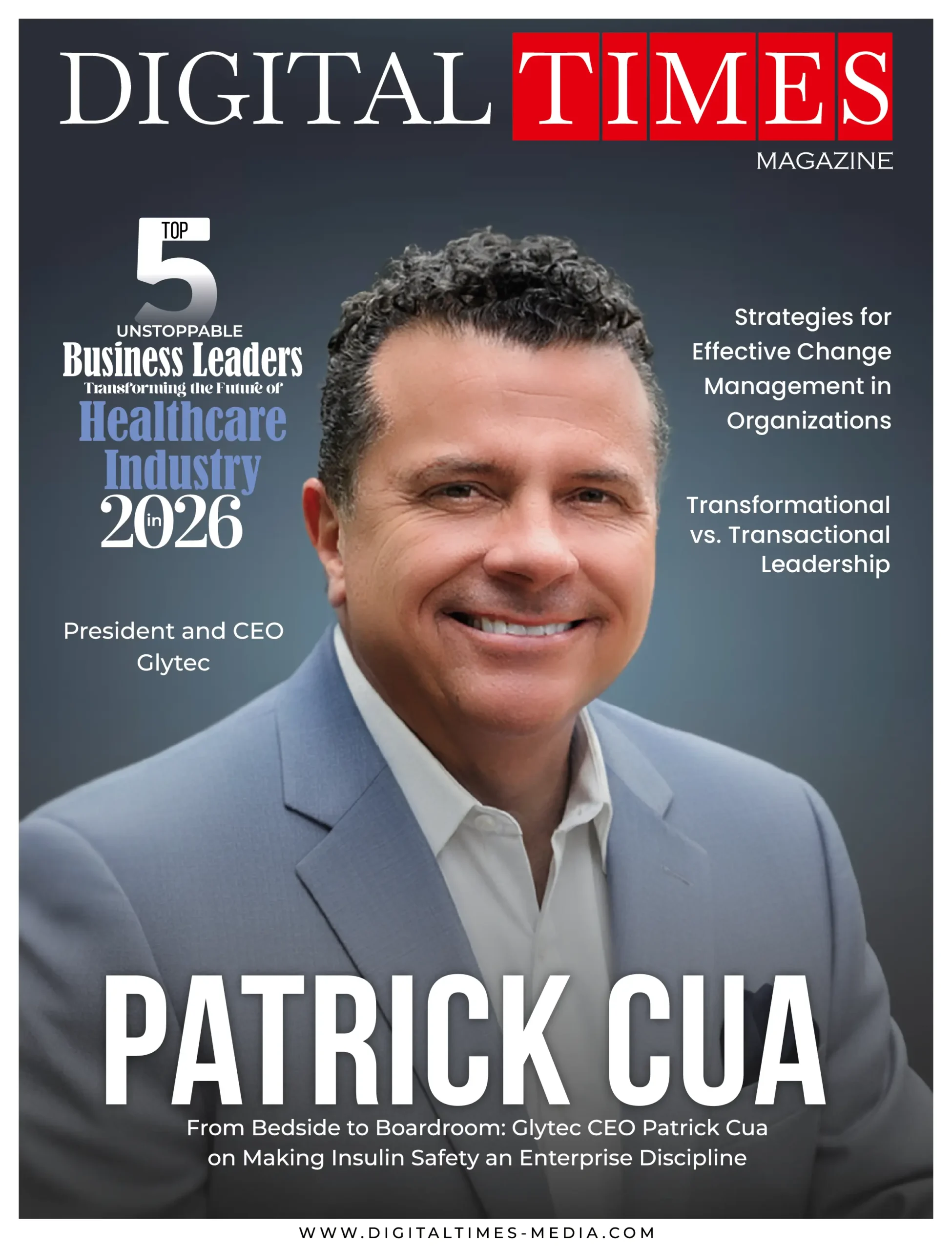
From Bedside to Boardroom: Glytec CEO Patrick Cua on Making Insulin Safety an Enterprise Discipline
“Insulin is one of the most common high-risk medications in the hospital,” Cua says. “Manage it well and you can lower complications, reduce staff burden, protect margin, and most importantly, prevent harm.”
That statement reflects a shift in how many health systems are starting to view glycemic management. Not only as a clinical safety issue, but as an enterprise risk that affects patient outcomes, operational capacity, and financial performance.
In hospitals around the world, nursing teams check glucose, providers adjust insulin orders, diabetes teams monitor trends, and pharmacy reviews dosing. Yet insulin is still often treated as “routine.” When insulin therapy goes off course, the consequences are not routine.
Patrick Cua, President and CEO of Glytec, argues insulin management should not sit only inside unit protocols. It belongs on executivedashboards, with governance, measurement, and accountability.
Why Insulin Belongs in the C-Suite
In many hospitals, insulin management is seen as the responsibility of endocrinology, pharmacy, or nursing. It is treated as a clinical workflow: order, monitor, adjust.
Cua challenges that framing. “Boards ask about safety, capacity, clinical reputation, and cost. Glycemic management touches all four.”
Safety
Poor glycemic control can lead to complications. Hypoglycemia and hyperglycemia are among the most common adverse events in inpatient care. When insulin therapy goes wrong, hospitals may see longer length of stay (LOS), higher readmissions, more ICU transfers, and higher mortality.
Glytec reports that 30–40% of inpatients require insulin therapy during their stay. When glycemic control slips, clinical risk can quickly become an operational and reputational risk.
Capacity
When glycemic events occur, bed turnover slows, staff workload rises, and time to target glucose can lengthen. Each delayed discharge is a lost bed day that can limit throughput.
For leaders focused on occupancy and flow, insulin is not only a clinical issue. It can be a capacity lever when managed with the same discipline used for other safety priorities.
Cost and Margin
Adverse glycemic events can increase costs through complications, longer stays, and avoidable care escalations. Glytec cites examples of incremental cost per stay (for severe hypoglycemic episodes) exceeding $10,000.
Add the operational cost of manual steps, including nursing time and repeated checks, and it becomes clear why health systems are looking for standardized, algorithm-based insulin workflows that reduce variation and prevent avoidable harm.
If insulin is a high-risk medication, and mismanagement affects safety, capacity, and cost, it warrants executive oversight.
Meet the Company: Glytec’s Approach
Glytec is a software company focused on inpatient insulin (glycemic) management. Its flagship product, Glucommander®, is an FDA-cleared insulin-dosing decision-support platform that supports dosing recommendations for IV and subcutaneous insulin within the EHR workflow. In recent years, Glytec has extended capabilities with an AI-supported Command Center designed for enterprise visibility.
What Glucommander® Does
Glucommander® pairs an evidence-based insulin dosing algorithm with built-in safety limits and clinical oversight features. It supports standardized care across units and facilities while helping teams follow consistent protocols.
According to Glytec, multi-site deployments have reported reductions in hypoglycemia of up to 99.8% and a reduction in hospital LOS of approximately 3.2 days. Results vary by organization, patient population, baseline performance, and implementation scope.
The Command Center
Recognizing that insulin risk is not only a bedside issue, Glytec built the Command Center to provide system-wide, real-time insight for clinical and operational teams.
The platform uses data available in the clinical workflow to:
- show risk heatmaps by unit and cohort
- identify where glycemic risk is rising
- track interventions
- report outcomes for leadership review
“Executives want to see where risk is rising, whether interventions are working, and what it means for safety and capacity,” Cua notes. “That requires a platform and a command view, not a collection of unit protocols.”
Reframing Insulin Management as Enterprise Risk
What does it mean to manage insulin as an enterprise discipline? In practice, it requires governance, technology that supports visibility, and an operating model that reduces variation.
Governance and Accountability
Board-level oversight is central. Cua emphasizes that insulin-related safety should be included in governance frameworks. That includes:
- a named executive sponsor (for example, the CMO, CNO, or Chief Patient Safety Officer)
- a glycemic safety committee
- quarterly reporting to leadership
- alignment of glycemic KPIs with organizational priorities
In this model, glycemic risk becomes part of the enterprise risk profile alongside infection rates, falls, readmissions, and capacity utilization.
Technology Architecture
An enterprise approach requires dependable technology that fits into existing clinical systems. The platform must support:
- EHR-based workflows
- consistent protocols across units
- dosing recommendations tied to approved order sets
- analytics and reporting leaders can act on
Workforce and Change Management
Insulin safety is not only a technology issue. It requires workflow design that reduces manual steps, training and competency building for nurses and providers, clear escalation pathways, and ongoing oversight. The goal is consistent practice across shifts, units, and facilities.
Measurement and Outcomes
You cannot manage what you do not measure. Glytec emphasizes tracking KPIs such as:
- mild and severe hypoglycemia
- hyperglycemia
- time in range and time to target glucose
- LOS for insulin-treated patients
- readmissions
- adherence to order sets and protocols
- adoption by unit and role
Time to Value
Leadership wants early wins and clear measurement. Glytec states that hospitals using their platform often achieve payback within six months.
A Real-World Transformation
To illustrate what an enterprise approach can look like, Glytec shares a case example from a regional health system.
Setting: Northeast Georgia Health System (NGHS), a not-for-profit community health system with four facilities and more than 700 beds in Georgia.
Cohort: More than 1,000 nurses and 90% of providers trained on Glucommander®, including hospitalists, intensivists, cardiovascular surgeons, emergency department physicians, obstetricians, and advanced practice providers.
Reported operational metrics suggest value through improved care reliability and improved capacity over time.
Tiffany Young, BSN, RN, CDCES, Diabetes Program Manager at Northeast Georgia Health System, described the implementation support this way: “The Glytec team was available 24/7. They were rounding on the units and they provided real-time support, which I think helped nurses know that they were there with them to help make this process smooth.”
Kris Brown from the Cardiovascular Step-Down Unit at NGHS added: “Glucommander takes a lot of work and worry out of having a patient on an insulin drip. It’s very straightforward, easy to use, and has been a great addition to Epic.”
Reported baseline to result highlights:
- moved from paper-based insulin protocols to Glucommander®
- reduced average time to target blood glucose by 36 minutes
- decreased average length of stay by 3.57 days
- supported earlier movement out of critical care units for appropriate patients
Operating model notes (as described):
- cross-functional work across nursing, physician, and IT teams
- go-live support with real-time availability and ongoing data review
This example is intended to show how insulin safety can shift from a departmental concern to an enterprise initiative that is governed, measured, and improved over time.
AI, But Responsible
Cua acknowledges that the term “AI” can raise valid concerns in healthcare. For Glytec, AI is used within defined safety limits. The dosing algorithms are FDA-cleared and clinically validated, and the platform emphasizes transparency and auditability.
“No black boxes,” says Cua. “Every recommendation is explainable, every alert is tied to an approved protocol, and every outcome is measured.”
With insulin, a high-risk medication, health systems need decision support that clinicians can trust, review, and govern.
The Transformation Roadmap
According to Cua and Glytec’s implementation approach, successful rollouts focus on five disciplines:
- EHR workflow build: order sets, data flow planning, go-live milestones, and targeted build timelines
- Governance: system-level ownership, named executive sponsor, safety committee, routine leadership reporting
- Change management: training and competency building, nursing workflow design, escalation pathways that reduce manual burden
- Measure definition: a short set of executive KPIs (for example, mild and severe hypoglycemia, time in range, LOS, readmissions, adoption)
- Time to value: early wins by unit, tracked in the Command Center, with a clearly communicated payback horizon
Leadership and role clarity matter. “If teams know the plan, the proof, and their role, safety improves and the work becomes sustainable,” Cua adds. “Insulin management is one of those areas where patient safety, workforce workload, and financial performance can move together.”
The Road Ahead: From Hospital to Home
Glytec’s roadmap does not stop at the hospital bed. The vision extends through transitions of care, including the handoff from hospital to home.
Cua points to visibility as the next step: “Get a clear view of system-wide glycemic risk, act on it, and measure the improvement.”
Hospitals that build this view will be better prepared for evolving reporting requirements and stakeholder expectations.
Executive Action: What to Do in 30 Days
For systems ready to act, Glytec recommends putting glycemic safety on the executive agenda:
Commission an enterprise glycemic risk review and report to leadership on safety, capacity, and cost.
Key questions:
- Which patient populations are currently experiencing the worst glycemic outcomes, and where are the risks concentrated across units or service lines?
- What is the LOS and readmission variance for insulin-treated patients, by site and cohort?
- Which manual steps in insulin care can we safely reduce next quarter, and what workload does that remove from clinical teams?
This places glycemic risk on the executive dashboard, not only in unit-level huddles.
Sidebar: How Glucommander Helps Health Systems
Safe, standardized care
- safety limits and oversight features help reduce preventable harm
- standardized insulin protocols reduce variation across units
Workflow fit
- EHR-based order sets support adoption by clinical teams
- dashboards support continuity of care and faster decision support
Measurable impact
- outcomes reporting with drill-downs supports clinical and operational review
- protocol-based dosing and governance support sustained performance over time
Example (NGHS): In one system, hypoglycemic incidents <70 mg/dL decreased by 179 incidents, improving the <70 rate from 1.12% to 0.93% (16.9% decrease) from 2024 to 2025 (January–June).
Sidebar: Command Center for Enterprise Glycemic Management
System-wide diagnostics
- pinpoint current risk and performance by site and unit
- identify gaps and opportunities across the organization
Care prioritization
- flag patients at risk for hypo- or hyperglycemia using predictive models
- direct staff attention to the right patients at the right time
Quality improvement tracking
- monitor whether interventions are working
- show trend lines on safety and capacity, with links to outcomes over time
“The Command Center isn’t just about dashboards,” says Cua. “It’s about giving leaders the intelligence to protect patients, improve operations, and measure improvement in real time.”
CEO Box: 3 Monday Questions
- What is our severe hypoglycemia rate, and is it trending down?
- How has improved glycemic performance affected LOS and throughput this quarter?
- Which manual steps in insulin care can we safely reduce next, and what will that remove from clinical workload?
These questions help keep insulin safety visible at the executive level.
Putting Insulin Safety on the Executive Agenda
For too long, insulin has been treated as a narrow workflow: a pharmacy order, a nurse check, an endocrinology consult. The prevalence of insulin therapy in hospitalized patients, and the consequences when glycemic control falters, support a different approach.
Cua’s message is straightforward: insulin safety is a leadership issue. Health systems that treat it as an enterprise discipline can align governance, technology, workforce change, and measurement to reduce preventable harm, reduce variation, and improve operational performance.
The invitation to executives is simple: ask the hard questions, measure the right things, and build the operating model to manage glycemic risk at scale.