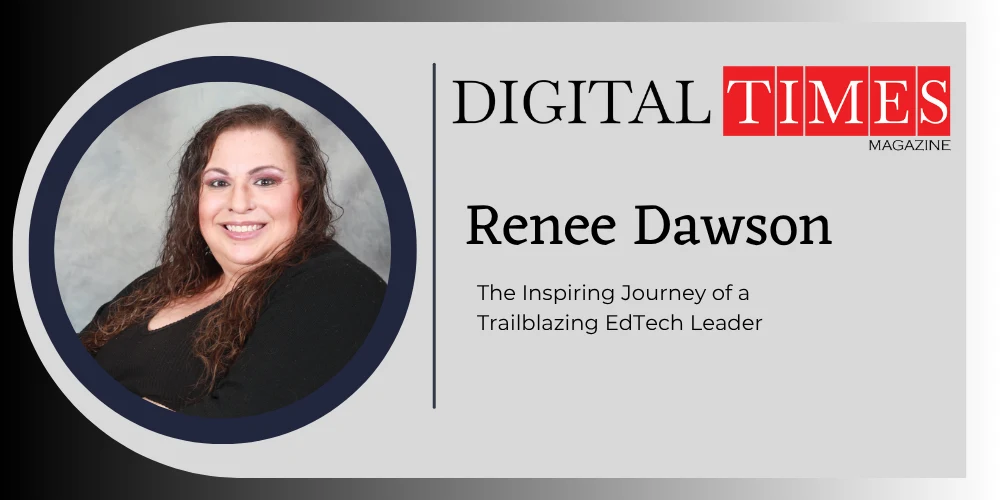
Renee Dawson –Customer Success and User Engagement Lead.
EliteGamingLIVE
In a digital age where innovation and inclusion often feel at odds, one leader has made it her mission to unite the two—transforming not only classrooms but entire communities through the power of esports, educational technology, and equity-focused programming. Her journey from a special education teacher to an EdTech Specialist and esports advocate speaks volumes about passion, perseverance, and purpose. Through her work with EliteGamingLIVE (EGL), the Verizon Innovative Learning Schools (VILS) initiative, and numerous inclusive student programs, she is reshaping the narrative around education and access.
From Special Education to Esports Advocacy
The transition from special education to esports might seem unconventional at first glance, but for this visionary leader, it was a natural evolution. “Esports was one of the few extracurricular activities where my students were not only successful, but accepted by their peers,” she explains. Her journey with EGL began during her tenure as an Instructional Technology Specialist when she launched a pilot esports team at her middle school. Instantly drawn to EGL’s mission—blending gaming and learning in a socially supportive environment—she later joined the company to amplify its impact on students across the nation.
Esports as a Gateway to Equity
Her deep commitment to equity in education fuels her belief that esports and digital platforms can close the digital divide and opportunity gap. For students who may not find success in traditional academic settings, esports presents a unique avenue for engagement and skill development. “It provides inclusive, engaging, and accessible experiences that help all students—especially those with disabilities—thrive,” she shares.
With adaptive technologies like screen readers, customizable controls, and captioning, digital gaming platforms ensure no student is left behind. Moreover, esports programs often lead to broader investments in school technology infrastructure, ultimately benefiting entire communities. “We’ve seen parents using Chromebooks from the school to apply for jobs or return to school themselves,” she notes, emphasizing the community-wide ripple effect.
Beyond the hardware and software, esports fosters social-emotional growth by creating inclusive communities where students feel seen, heard, and valued. “These are more than just platforms—they’re vehicles for access, voice, and empowerment,” she adds.
The Verizon Innovative Learning School Initiative: A Game-Changer
Managing the VILS Initiative was a defining moment in her career. With 1:1 Chromebooks, LTE data access, and comprehensive professional development, the program revolutionized not just her school but also the lives of the students and their families.
One of the most touching impacts came unexpectedly. “Several parents used their children’s Verizon Chromebooks to apply for jobs or even go back to school through online programs,” she recalls. Her work was so impactful that Verizon HQ created a video and article about her efforts, showcasing her as a beacon of innovation and equity in education (https://www.verizon.com/about/news/waving-magic-wand-tech-innovation-atlanta-middle-school).
Empowering Student Leaders Through Esports and Minecraft
Her experience founding and coaching esports teams—along with Minecraft-focused programs—highlights the transformational power of digital engagement. These initiatives often gave socially excluded students a reason to come to school.
“Some students experienced being part of a team for the first time in their lives,” she says. Her “Lunch Bunch” esports initiative not only increased attendance but also reduced suspensions. Through the Minecraft Student Ambassador Program, she empowered skilled students to lead peers and even assist teachers in delivering lessons, developing leadership and communication skills along the way.
Overcoming Challenges to Build Inclusive Programs
Transportation was one of the greatest barriers to after-school participation. To solve this, she aligned her program schedule with the school’s aftercare offerings and launched initiatives during school hours, such as the lunchtime esports program. By creatively navigating logistical challenges, she ensured that every student could participate regardless of circumstances.
A Differentiated Approach to Professional Development
Whether facilitating a Screencastify training or helping educators leverage new tools, she tailors her professional development sessions based on participant comfort levels. With a 1-to-4 scale self-assessment at the start of each session, she differentiates her approach in real time. “I make sure I fully understand the tools so I can pivot depending on the group,” she says.
Hands-on engagement, real-time walkthroughs, and “Choose Your Own Adventure” creation tasks make her sessions practical and directly applicable to classroom needs.
The Tools That Transformed Her Practice
Her favorite edtech tools are as impactful as her approach. Screencastify remains a cornerstone—both for instruction and her own content creation. Canva allows for quick, visually compelling lesson design, while Kami stands out for its accessibility, particularly with special education students. Wakelet, a curation platform, is her go-to for organizing and sharing content with students, teachers, and parents.
Creativity Meets Professionalism
Digital design and differentiated resource creation are more than work—they’re her hobbies. “I usually wind down at the end of the day by watching reruns or a true crime documentary while creating on my MacBook,” she says with a smile. This love for creativity ensures that her resources are not only practical but also engaging and beautiful.
A Student Success Story That Says It All
Her favorite student success story exemplifies her mission. During the pandemic, one student facing housing insecurity used the LTE-enabled Chromebook to teach himself coding in multiple languages. He later co-led coding classes with the STEM teacher and was recognized on The 74’s 16 Under 16 in STEM list.
“He currently runs a Gamer Chat Club and dreams of attending Georgia Tech,” she proudly notes. Stories like his demonstrate how access to technology, paired with mentorship and support, can completely change a student’s trajectory.
Vision for the Future: Accessibility, Equity, Empowerment
Looking ahead, she is optimistic about how educational technology can further support underrepresented communities:
- Universal Design: “Tools must be created with accessibility built-in from the start.”
- Digital Equity: Ensuring consistent access to devices, internet, and quality content for all students.
- Amplifying Student Voice: Technology should reflect and uplift the identities and experiences of all learners.
- Empowering Educators: Professional development and EdTech coaching must be prioritized.
She emphasizes that upcoming federal legislation requiring digital accessibility standards by 2026 could be a turning point. “EdTech should be a bridge, not a barrier,” she asserts.
Final Words: Purpose-Driven Impact
This trailblazer’s journey is one of dedication—to students, to educators, and to building a more equitable digital world. From the classroom to the esports arena, from professional development to nationwide initiatives, she has left an indelible mark on the educational landscape.
“Technology, when implemented with care and intention, can be a powerful equalizer,” she says. Through her leadership, creativity, and unshakable commitment to equity, she is ensuring that every student has a seat at the table—and the tools to succeed once they’re there.
Her story is not just about innovation. It’s about impact. And it’s only just beginning.