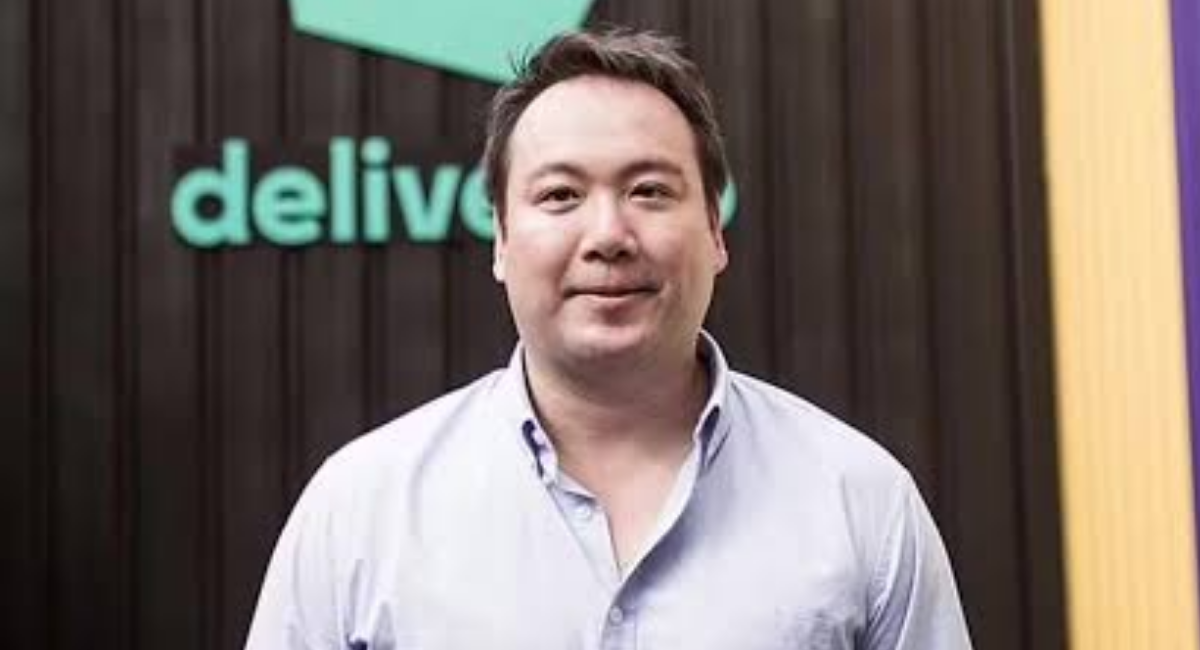
Food delivery industry has witnessed a paradigm shift over the last ten years. It used to involve making a phone call to a local restaurant with the hope that there was food delivery available. Today, it involves browsing through several hundred restaurants online, comparing menus, monitoring deliveries, and receiving food in minutes from a single smart phone application. The person responsible for this shift is Will Shu, founder and CEO of Deliveroo.
However, his ambitions were greater than merely making the process of food delivery easier. Will Shu wanted to develop a technological platform that would bring restaurants, consumers and food delivery persons together in one digital ecosystem. With the help of logistics, data analysis and customer-friendly interface, Deliveroo became one of the most successful food delivery companies in the world.
Early Life: From Finance to Entrepreneurship
Will Shu, who was born in America and went on to establish his career in England, graduated in Economics before working as an investment banker.
Though finance did provide him with useful experience in the field of business, Shu grew increasingly fascinated with the concept of entrepreneurship. Being based in London, Shu observed that there were many good restaurants with excellent dine-in options but lacked proper food delivery services.
There was very little choice for customers and restaurants failed to expand their customer base.
Undaunted by such difficulties, Shu recognized the potential of technology to solve the problem.
It is for this reason that in 2013, Shu founded Deliveroo to provide quality restaurant food to people via an efficient digital interface.
Will Shu at a Glance
| Category | Details |
| Full Name | Will Shu |
| Industry | Food Delivery & Food Technology |
| Company | Deliveroo |
| Founded | 2013 |
| Headquarters | London, United Kingdom |
| Business Focus | Online Food Delivery and Logistics |
| Known For | Building Deliveroo into a global delivery platform |
| Leadership Style | Customer-focused, data-driven, innovation-led |
Building Deliveroo
Deliveroo had a very simple yet daring objective of connecting consumers with restaurants which did not previously have the option of delivering their meals.
It was not involved in building new restaurants but instead, had a digital platform enhanced by advanced logistic technology.
It allowed consumers to:
- Look at the menu of restaurants
- Order via a mobile app
- Pay for their meals digitally
- Get real-time updates on delivery
- Get their meals delivered fast and conveniently
For restaurants, Deliveroo provided an opportunity of reaching more customers without having to build a delivery system of its own.
Reinventing Food Delivery Through Technology
Technology sits at the core of Deliveroo’s business model.
The company uses sophisticated software to optimize:
- Order management
- Delivery routing
- Rider allocation
- Demand forecasting
- Restaurant operations
- Customer recommendations
Real-time algorithms help determine the fastest delivery routes while balancing supply and demand across thousands of daily orders.
These capabilities improve efficiency for restaurants, delivery partners, and customers alike.
By treating logistics as a technology challenge rather than simply a transportation service, Deliveroo created a competitive advantage in a crowded marketplace.
Traditional Food Delivery vs. Deliveroo’s Digital Platform
| Traditional Delivery | Deliveroo Model |
| Phone-based orders | Mobile and web ordering |
| Limited restaurant options | Wide selection of restaurants |
| Manual order tracking | Real-time delivery tracking |
| Restaurant-managed logistics | Integrated delivery network |
| Cash payments | Secure digital payments |
| Basic customer experience | Personalized recommendations and updates |
Supporting Restaurants in the Digital Economy
One of Will Shu’s key insights was that restaurants needed more than delivery-they needed digital growth opportunities.
Deliveroo provides restaurant partners with tools to:
- Reach new customers
- Analyze sales performance
- Improve operational efficiency
- Manage online orders
- Expand delivery coverage
- Increase brand visibility
The platform enables many small and independent restaurants to compete alongside larger chains by giving them access to technology and logistics they might not otherwise afford.
This has contributed to the growth of local food businesses in many cities.
Innovation Beyond Delivery
Deliveroo has expanded beyond its original delivery service by introducing innovations designed to improve the entire food ecosystem.
These initiatives include:
- Delivery-only kitchens
- Grocery delivery partnerships
- Subscription programs
- AI-powered recommendations
- Restaurant analytics
- Enhanced logistics technology
By continually evolving its platform, Deliveroo has responded to changing consumer expectations while helping restaurant partners adapt to digital commerce.
Innovation remains one of the company’s defining strengths.
Leadership Lessons from Will Shu
| Leadership Principle | Business Lesson |
| Solve Everyday Problems | Simple ideas can create massive opportunities |
| Build Strong Partnerships | Success comes from helping partners succeed |
| Use Technology Strategically | Digital platforms improve efficiency and scalability |
| Focus on Customer Experience | Convenience drives long-term loyalty |
| Adapt Quickly | Continuous innovation keeps businesses competitive |
| Think Long Term | Sustainable growth requires constant improvement |
Leadership Philosophy
Will Shu is known for maintaining a hands-on leadership style and a strong focus on customer experience.
His leadership emphasizes:
- Innovation
- Operational excellence
- Data-driven decisions
- Collaboration
- Continuous improvement
- Long-term thinking
Rather than viewing Deliveroo solely as a food delivery company, Shu sees it as a technology platform that connects multiple participants within the food economy.
This perspective has guided the company’s product development and international expansion.
The Future of Food Delivery
Consumer expectations continue evolving rapidly.
Today’s customers increasingly expect:
- Faster delivery times
- Personalized recommendations
- Contactless payments
- Sustainable operations
- Grocery and retail delivery
- AI-enhanced customer experiences
Artificial intelligence, automation, robotics, and predictive analytics are likely to play even larger roles in the future of food delivery.
Companies that combine operational efficiency with exceptional customer experiences will remain well positioned for growth.
Deliveroo continues investing in technology to support these evolving demands.
Building a Global Brand
Scaling Deliveroo internationally required balancing technology with local market understanding.
The company expanded across numerous countries while adapting to regional food cultures, restaurant ecosystems, and consumer preferences.
This global strategy relied on:
- Local partnerships
- Strong logistics infrastructure
- Scalable technology
- Customer-focused innovation
- Continuous product development
Shu’s ability to combine global ambition with local execution has been central to Deliveroo’s success.
What Entrepreneurs Can Learn from Will Shu
Will Shu’s entrepreneurial journey offers practical lessons for founders in every industry.
Identify everyday frustrations.
Many successful businesses begin by solving ordinary problems more effectively.
Create value for every stakeholder.
Customers, partners, and service providers should all benefit from your business model.
Leverage technology.
Digital platforms enable businesses to scale while improving operational efficiency.
Stay adaptable.
Markets evolve quickly, making continuous innovation essential.
Focus on execution.
Even simple ideas require disciplined implementation to achieve long-term success.
These principles remain highly relevant for entrepreneurs building businesses in today’s digital economy.
Conclusion
With his combination of technology, logistics, and innovations, Will Shu has brought about an innovative way of working in the food delivery industry that has been very beneficial to consumers, restaurants, and partners who deliver food.
The entrepreneurial success story of Will Shu is a good example of how well customer needs can be addressed in an effort to bring about change in business practices through technological innovation. His work with Deliveroo has proved that it is possible to solve an everyday problem and turn it into an international business phenomenon.
With changes in the field of artificial intelligence, automation, and digital commerce, the innovation by Will Shu in the field of food technology industry is a good example for future entrepreneurs.
Frequently Asked Questions (FAQs)
1. Who is Will Shu?
Will Shu is the founder and CEO of Deliveroo, a global food delivery company that connects customers with restaurants through a technology-driven logistics platform.
2. What is Deliveroo?
Deliveroo is an online food delivery platform that enables users to order meals from restaurants, track deliveries in real time, and make secure digital payments through its app and website.
3. Why is Will Shu influential in the food delivery industry?
He modernized restaurant delivery by creating a scalable digital platform that combines technology, logistics, and customer convenience while helping restaurants expand their reach.
4. How does Deliveroo support restaurants?
Deliveroo provides restaurants with delivery logistics, online ordering systems, customer insights, marketing opportunities, and technology tools to help grow their businesses.
5. What can entrepreneurs learn from Will Shu?
Entrepreneurs can learn the importance of solving everyday customer problems, building strong partnerships, leveraging technology, focusing on execution, and continuously adapting to changing markets.