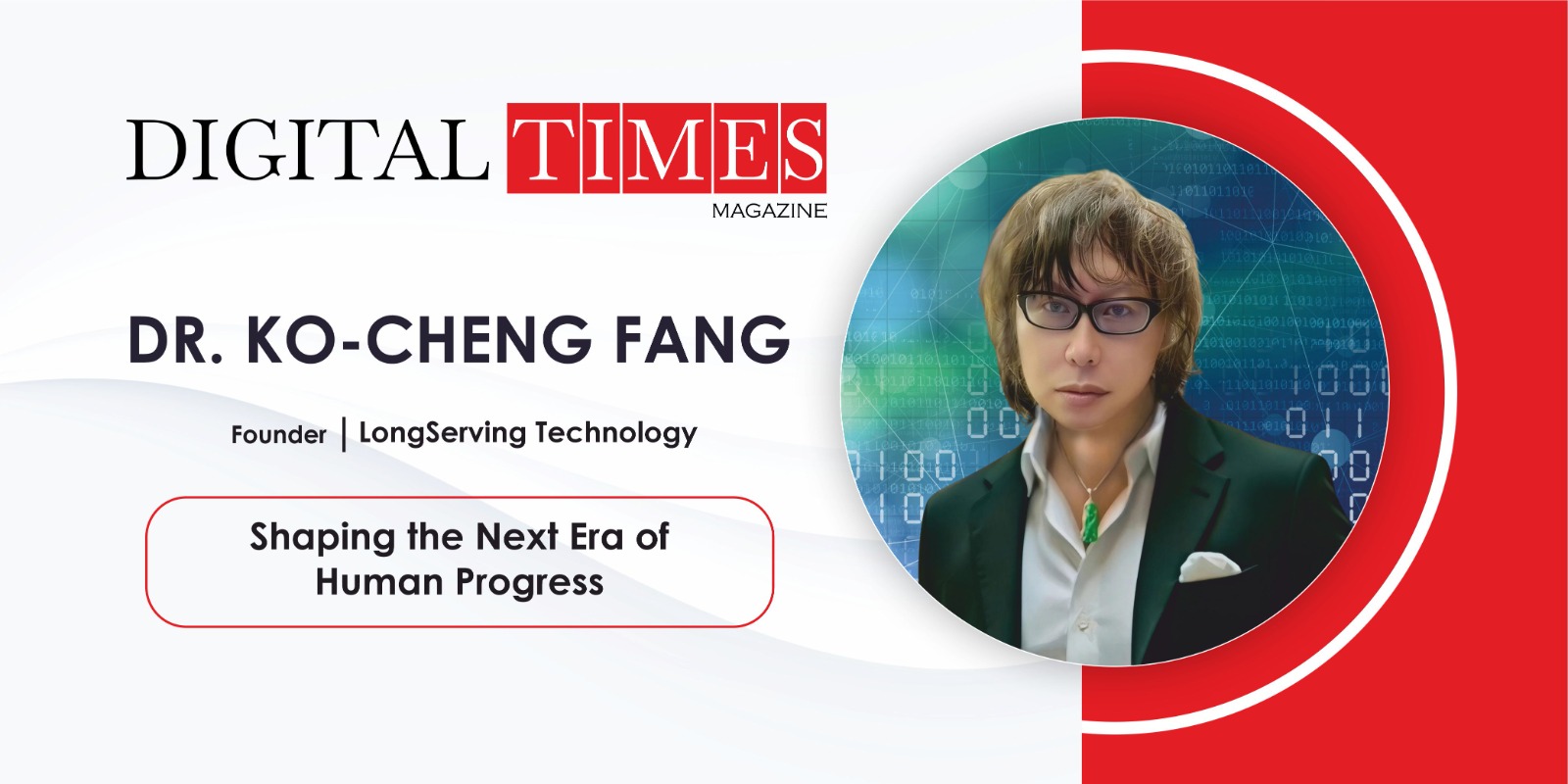
Every generation is shaped by a handful of ideas that arrive before their time.
At first, they exist only in the minds of those willing to question accepted limits. They are often dismissed as improbable, misunderstood by the market, and constrained by technologies that have yet to catch up with their ambition. Yet history has repeatedly shown that the future rarely emerges from what is familiar. It is created by individuals who can see beyond the horizon of the present and dedicate themselves to solving challenges long before the world recognizes their significance.
This ability to think beyond the boundaries of the immediate has defined Dr. Fang’s journey as an inventor, entrepreneur, and technology visionary. As the Founder of LongServing Technology, he has built an organization dedicated to exploring the next frontier of computing, advanced materials, and transformative technological innovation. Throughout his career, Dr. Fang has pursued breakthroughs not by following prevailing trends but by identifying the fundamental obstacles that could shape the next era of human progress.
The Vision That Preceded the Cloud
Dr. Fang’s approach to leadership and innovation was shaped by experiences that placed him years ahead of prevailing technological paradigms. Long before cloud computing became a global standard, he envisioned a secure virtual architecture capable of protecting and restoring data remotely, laying the conceptual groundwork for what would later become cloud-based cybersecurity. His pioneering work, coupled with decades of navigating technological secrecy, intellectual property protection, and unprecedented challenges, reinforced a philosophy centered on anticipating future bottlenecks rather than reacting to present trends. These experiences taught Dr. Fang that transformative innovation requires the courage to solve problems decades before the market recognizes their importance.
Engineering the Next Decade of Competitive Advantage
For Dr. Fang, the future of global competitiveness lies not in incremental improvements but in foundational technological transformation. He believes enterprises must invest in deep technologies capable of overcoming the limitations of existing electronic computing systems while simultaneously reimagining intellectual property, industrial collaboration, and material science. From photonic computing architectures and next-generation memory systems to strategic intellectual property partnerships and advanced material innovation, Dr. Fang envisions a future where businesses thrive by building technological ecosystems that address the most significant challenges of the coming decade.
The Courage to Lead Beyond Consensus
Throughout his entrepreneurial journey, Dr. Fang has faced decisions that demanded extraordinary patience, conviction, and resilience. Some of the most difficult choices involved maintaining confidentiality around breakthrough technologies, resisting the temptation of short-term commercial gains, and investing years in research long before markets were prepared to understand the value being created. These experiences reinforced his belief that leadership requires unwavering commitment to long-term vision, the ability to transform innovation into shared societal value, and the courage to challenge established industry norms when necessary.
Cultivating a Culture of Breakthrough Thinking
At LongServing Technology, innovation is driven by a culture that encourages exploration beyond conventional boundaries. Dr. Fang believes meaningful breakthroughs emerge when teams are empowered to challenge assumptions, embrace experimentation, and pursue ambitious goals despite uncertainty. By actively participating in problem-solving alongside his researchers and maintaining a strong focus on commercialization from the earliest stages of development, he has created an environment where creativity, collaboration, and calculated risk-taking can flourish. This culture reflects his conviction that transformative technologies are born when visionary thinking is supported by disciplined execution.
Distinguishing Lasting Value from Passing Trends
When assessing new ideas, Dr. Fang applies a framework grounded in long-term impact rather than market excitement. He evaluates whether a technology addresses fundamental challenges facing humanity and industry, whether it can be validated through rigorous scientific testing, and whether it possesses a realistic path toward commercialization and intellectual property protection. In his view, true innovation is measured not by headlines or recognition but by its capacity to create enduring value, reshape industries, and solve problems that will remain relevant for decades to come.
Where Research Meets Real-World Impact
For Dr. Fang, research and commercialization are not separate stages of innovation but parallel processes that must evolve together from the very beginning. Whenever he develops a new technology, he simultaneously designs its commercialization roadmap, ensuring that scientific breakthroughs are accompanied by practical pathways to market adoption and societal impact.
This philosophy has guided the development of LongServing Technology’s innovations, from X-photonic materials and photonic memory architectures to electro-optical conversion devices. Rather than viewing research as a pursuit of academic recognition alone, Dr. Fang believes innovation achieves its highest purpose when it creates tangible value for society. To accelerate commercialization, he has championed pragmatic approaches, including modifying existing equipment, developing proprietary manufacturing processes, and forming strategic alliances with established semiconductor foundries. By integrating intellectual property strategy, capital planning, and commercial execution into the innovation lifecycle, Dr. Fang has built a model that tightly connects frontier research with real-world application.
The Power of Collaborative Innovation
Dr. Fang views international partnerships and cross-industry collaboration as essential drivers of technological advancement rather than simple mechanisms for business expansion. In his perspective, many of the world’s most pressing challenges, including the growing demands of artificial intelligence and global computing infrastructure, cannot be solved by isolated organizations operating independently.
He believes meaningful progress emerges when expertise, resources, and perspectives from multiple industries and regions converge around shared objectives. By fostering collaboration across technology sectors, financial institutions, manufacturing ecosystems, and research communities, Dr. Fang sees an opportunity to accelerate innovation while addressing complex global challenges at scale.
Building Ecosystems Beyond Industry Boundaries
A defining characteristic of Dr. Fang’s approach to innovation is his commitment to integrating expertise across traditionally separate disciplines. Rather than viewing cybersecurity, artificial intelligence, photonic computing, advanced materials, and intellectual property as isolated domains, he sees them as interconnected components of a larger technological ecosystem.
This cross-domain strategy enables LongServing Technology to overcome limitations that often hinder emerging technologies. By combining proprietary innovations with existing industrial capabilities and infrastructure, Dr. Fang has sought to accelerate the development and adoption of next-generation computing architectures while reducing barriers to commercialization. His belief is that transformative breakthroughs increasingly occur at the convergence of disciplines rather than within a single field of specialization.
Accelerating the Journey from Laboratory to Market
Dr. Fang recognizes that technological breakthroughs achieve their greatest impact only when they can be deployed at scale. To bridge the gap between research and commercialization, he actively pursues strategic alliances with semiconductor manufacturers, mobile technology companies, and global technology leaders.
Rather than building entirely new industrial ecosystems from scratch, he advocates leveraging existing manufacturing capacity and supply chains to accelerate adoption. Through partnerships that enable the transition from traditional electronic architectures to photonic technologies, Dr. Fang seeks to shorten commercialization timelines and expand the reach of emerging innovations. His approach reflects a broader belief that collaboration can significantly accelerate the transformation of scientific discoveries into commercially viable solutions.
Aligning Innovation with Global Responsibility
For Dr. Fang, selecting strategic partners extends beyond financial considerations. He places significant emphasis on shared vision, long-term commitment, and the ability to integrate resources across industries and regions.
Through innovative frameworks such as the Strategic Equity Hedging Protocol, he aims to align technological innovation with global capital, industrial transformation, and societal progress. By bringing together sovereign wealth funds, technology investors, and industry leaders, Dr. Fang seeks to create partnerships that generate both commercial value and broader economic development. In his view, successful innovation should not only advance technology but also contribute meaningfully to the evolution of industries and communities worldwide.
The Leadership Imperative for a New Era
Looking toward the future, Dr. Fang believes the next generation of successful leaders will be defined by their ability to think beyond traditional boundaries. As technological innovation becomes increasingly interdisciplinary, leaders must possess the vision to connect diverse fields, industries, and stakeholders around common goals.
He emphasizes the importance of long-term thinking, resource integration, and the willingness to challenge conventional approaches. Future leaders, in his view, will need to balance technological expertise with strategic foresight, commercial acumen, and a deep sense of responsibility toward societal progress. Those capable of building collaborative ecosystems rather than isolated organizations will be best positioned to drive meaningful change in an increasingly interconnected world.
Envisioning a Global Standard for the Future of Computing
If given the opportunity to influence global technology policy, Dr. Fang would advocate for the establishment of a comprehensive framework centered on photonic computing and all-optical architectures. He believes the future demands industry-wide standards that support the transition from traditional electronic systems to next-generation computing platforms capable of addressing the growing demands of artificial intelligence and high-performance computing.
Equally important, he supports policies that facilitate the transformation of existing industrial infrastructure through strategic collaboration and capacity transition initiatives. In Dr. Fang’s view, establishing global standards in these areas would accelerate technological progress, encourage international cooperation, and create a stronger foundation for the next era of computing innovation.
Shaping the Future Through Commercially Driven Innovation
For Dr. Fang, research and commercialization are inseparable components of the innovation process. Whenever he develops a new technology, he simultaneously designs its pathway to commercialization, believing that scientific breakthroughs must ultimately create tangible societal value rather than remain confined to academic recognition. This philosophy has guided the development of LongServing Technology’s innovations, from X-photonic materials and photonic memory architectures to electro-optical conversion systems.
Rather than pursuing research solely for theoretical advancement, Dr. Fang focuses on building complete technological ecosystems capable of transitioning efficiently from laboratory development to industrial deployment. Through strategic partnerships with established semiconductor foundries, proprietary manufacturing innovations, and comprehensive intellectual property strategies, he has sought to bridge the gap between frontier research and practical application. In his view, fundamental research breaks technological barriers, while commercialization ensures those breakthroughs generate meaningful impact on society.
Collaboration as a Catalyst for Global Progress
Dr. Fang views international partnerships and cross-industry collaboration as far more than mechanisms for business growth. He considers them essential drivers of technological transformation, industrial restructuring, and solutions to some of the world’s most pressing challenges.
As emerging technologies become increasingly complex, he believes that meaningful breakthroughs require expertise and resources from multiple sectors and regions. By bringing together technology leaders, manufacturers, investors, and research communities, organizations can accelerate innovation while addressing challenges that no single entity could solve independently. For Dr. Fang, collaboration is not simply an advantage, it is a necessity for advancing the next generation of computing and technological infrastructure.
Building Innovation at the Convergence of Disciplines
A defining feature of Dr. Fang’s innovation strategy is his commitment to cross-disciplinary integration. He believes the most transformative breakthroughs emerge at the intersection of multiple fields rather than within isolated areas of specialization.
At LongServing Technology, this philosophy is reflected in the integration of cybersecurity, photonic quantum computing, artificial intelligence, advanced materials, and intellectual property strategy into a unified technological ecosystem. By combining expertise across these domains, Dr. Fang seeks to overcome limitations that traditional research and development environments often struggle to address. This approach allows emerging technologies to leverage existing industrial capabilities while accelerating the transition toward next-generation computing infrastructure.
Accelerating the Path from Discovery to Deployment
Dr. Fang recognizes that scientific breakthroughs achieve their greatest value when they can be deployed on a global scale. To accelerate this process, he advocates strategic alliances with semiconductor manufacturers, mobile technology companies, and leading technology organizations.
Rather than replacing existing industrial ecosystems, he supports transforming and upgrading mature infrastructure to accommodate next-generation technologies. Through partnerships that enable established foundries to transition toward photonic manufacturing and collaborations that bring advanced technologies directly into consumer markets, Dr. Fang aims to shorten commercialization cycles while maximizing industry adoption. His approach reflects a broader belief that technological progress advances most effectively when innovation and industry evolve together.
Aligning Capital, Innovation, and Global Responsibility
For Dr. Fang, the selection of strategic partners extends beyond financial considerations. He places significant importance on shared vision, long-term commitment, and the ability to integrate resources across industries and geographic regions.
Through frameworks such as the Strategic Equity Hedging Protocol, he seeks to align technological innovation with global capital, industrial transformation, and societal advancement. By fostering partnerships involving sovereign wealth funds, technology investors, and industry leaders, Dr. Fang aims to create ecosystems that generate both commercial value and long-term economic impact. In his view, innovation should not only advance industries but also contribute to broader societal progress and sustainable development.
The New Blueprint for Leadership
Looking ahead, Dr. Fang believes the next generation of business leaders will be distinguished by their ability to transcend traditional boundaries and unite diverse disciplines around a common vision. As innovation becomes increasingly interconnected, future leaders must possess the foresight to integrate technology, business strategy, capital, and global collaboration into cohesive ecosystems.
He emphasizes that successful leadership will require more than technical expertise. It will demand long-term thinking, adaptability, resource integration, and the courage to challenge established conventions. In an era defined by rapid technological transformation, Dr. Fang believes leaders who can connect industries, foster collaboration, and pursue solutions with lasting societal impact will shape the future.
Advocating a Global Framework for Photonic Computing
If given the opportunity to influence a single global technology policy, Dr. Fang would advocate for the establishment of a comprehensive global standard for photonic computing and all-optical architectures. He believes such a framework would accelerate the transition beyond the limitations of traditional electronic systems while addressing the growing computational and energy demands of artificial intelligence and advanced computing.
Beyond technological standardization, he also supports policies that encourage legacy infrastructure transformation and collaborative innovation through strategic equity and intellectual property frameworks. In Dr. Fang’s view, future technology policies should not merely regulate innovation but actively facilitate international cooperation, industrial evolution, and the responsible advancement of next-generation computing technologies.
A Legacy Beyond Technology
In contemplating what legacy he hopes to leave behind, Dr. Fang contemplates much more than just his patents and products or accomplishments from a technological standpoint. He hopes that the LongServing Technology will be remembered as something that pushed back the frontiers of possibility with advanced materials, computer innovations, and human progress.
He aims to be remembered as a visionary leader who was always true to his vision and was always able to challenge traditional views and persevere through skepticism to deliver the breakthroughs. He is equally concerned about combining technological innovations with execution on a global scale to ensure that human progress is truly made through advances in science.