Survival is one of the brain’s most remarkable instincts. When life becomes overwhelming, it finds ways to protect us, shaping responses that may remain long after the danger has passed. But the patterns that once helped someone survive do not have to define how they continue to live. The brain can learn, adapt, and create new pathways, opening the possibility for healing that goes beyond coping and towards a life shaped by greater trust, resilience, and hope.
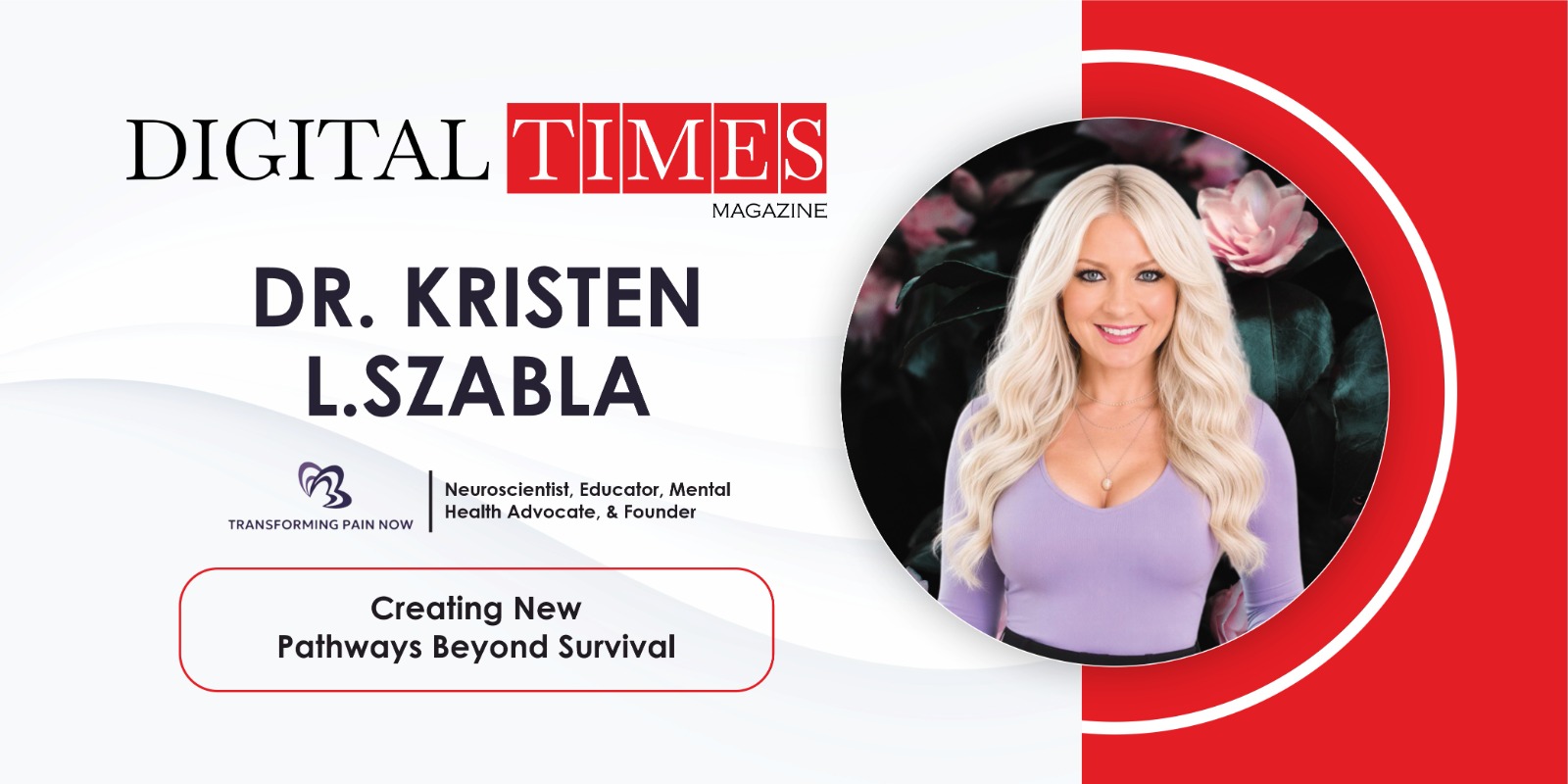
For Dr. Kristen L. Szabla, that possibility is both scientific and deeply personal. As a neuroscientist, educator, mental health advocate, and Founder of Transforming Pain Now®, she brings together years of research with her own experience of overcoming trauma.
A Mission Shaped by Science and Experience
Dr. Kristen’s professional journey was shaped by the convergence of neuroscience, lived experience, and a profound belief in the brain’s ability to heal.
After earning her Ph.D. in Neuroscience from the University of Texas Southwestern Medical Center, Dr. Kristen studied the molecular mechanisms underlying rapid-acting antidepressants and the neurobiology of mental illness. Her research introduced her to the extraordinary potential of neuroplasticity, the brain’s lifelong ability to adapt, reorganize, and create new neural pathways.
Her scientific knowledge became deeply personal through her own experiences with trauma and mental health challenges. Dr. Kristen realized that understanding trauma intellectually or learning to manage its symptoms did not always create lasting transformation. This inspired her to explore how healing could address the patterns formed within the brain and nervous system.
Recognizing a gap between advances in neuroscience and traditional approaches to trauma care, Dr. Kristen founded Transforming Pain Now®. Through neuroscience-informed frameworks, she helps individuals move beyond survival-based patterns and cultivate emotional resilience, confidence, healthier relationships, and a renewed sense of purpose.
For Dr. Kristen, neuroscience offers a powerful message of possibility. The brain is not fixed, and the experiences of the past do not have to determine the future.
Creating New Pathways Beyond Trauma
Transforming Pain Now® was founded on the belief that people deserve the opportunity to move beyond managing the effects of trauma and experience meaningful, lasting change.
Dr. Kristen approaches trauma not as a weakness or personal failure but as a neurobiological adaptation to overwhelming experiences. By helping people understand how trauma affects the brain and nervous system, she seeks to replace shame with knowledge and uncertainty with hope.
The organization integrates neuroscience, neuroplasticity, nervous system regulation, and neural repatterning to support emotional well-being and long-term resilience. Its programs are designed to help individuals develop greater self-trust, strengthen relationships, and move towards authentic empowerment.
Through partnerships with businesses, healthcare institutions, educational organizations, communities, and nonprofit groups, Dr. Kristen is also working to expand trauma-informed education beyond individual healing.
Her larger vision is to contribute to a future where trauma recovery becomes more accessible, measurable, compassionate, and grounded in scientific understanding.
The Brain’s Pathway to Healing
Advances in neuroscience are transforming how trauma and mental health are understood. Rather than asking what is wrong with an individual, Dr. Kristen encourages a more compassionate question: What happened within the nervous system, and how did the brain adapt to survive?
Traumatic experiences can influence neural networks connected to fear, memory, emotional regulation, stress responses, and relationships. However, neuroplasticity demonstrates that these patterns are not necessarily permanent.
Through repeated experiences, supportive environments, and appropriate interventions, the brain can develop healthier pathways that strengthen emotional regulation and resilience.
At Transforming Pain Now®, Dr. Kristen applies this understanding through neuroscience-informed education, nervous system regulation, and evidence-informed resilience practices. Her goal extends beyond helping people cope with difficult experiences. She seeks to support lasting changes that improve the quality of life and enable individuals to move beyond survival-based functioning.
Dr. Kristen also envisions a more personalized and measurable future for mental health, where scientific insights help shape interventions according to individual experiences and needs.
Changing the Conversation Around Violence
Dr. Kristen views violence against women and human trafficking as complex public health, mental health, and societal challenges rather than issues limited to the criminal justice system.
While legal accountability remains essential, she believes lasting progress also requires prevention, education, early intervention, accessible care, and long-term support for survivors.
A major challenge is the continued misunderstanding of trauma responses. Questions about why survivors did not leave or report abuse, often overlook how overwhelming experiences can affect the brain and nervous system. Responses such as fight, flight, freeze, and fawn are biological survival mechanisms rather than signs of weakness.
Dr. Kristen advocates for greater public understanding, coordinated trauma-informed care, and stronger collaboration among researchers, healthcare professionals, educators, law enforcement agencies, employers, community organizations, and survivors.
She also emphasizes the importance of creating environments where survivors feel safe seeking support and have access to opportunities that restore stability, dignity, and independence.
Rewiring the Journey Beyond Survival
From Surviving to Authentically Empowered Thriving™ is the signature program of Transforming Pain Now®. It combines Dr. Kristen’s scientific expertise with insights shaped by her own experience of overcoming trauma.
The program guides individuals through a structured journey beginning with safety, nervous system regulation, and resilience. Participants then explore survival-based patterns connected to fear, shame, isolation, and self-protection before developing greater emotional awareness, self-compassion, confidence, and healthier ways of responding.
The final stage focuses on creating a meaningful future grounded in personal values, resilience, purpose, and authentic empowerment.
Through neuroscience education, mindfulness, guided reflection, coaching, and evidence-informed practices, participants gain a deeper understanding of how their experiences have influenced the brain and nervous system.
Rather than asking what is wrong with someone, the program explores what happened to the nervous system and how healthier patterns can be developed moving forward.
The Neuroscience of a Thriving Workplace
Psychological safety has become increasingly important as organizations recognize the connection between employee well-being and sustainable performance.
Dr. Kristen explains that chronic stress, burnout, and persistent workplace pressure can influence concentration, creativity, communication, collaboration, and decision-making. When people operate in environments shaped by fear or uncertainty, they may hesitate to share ideas, acknowledge mistakes, or raise concerns.
Through the R.E.W.I.R.E.™ Neural Repatterning System, Dr. Kristen helps organizations understand the relationship between neuroscience, leadership, and workplace culture. The program equips leaders with strategies to strengthen trust, emotional intelligence, communication, resilience, and psychological safety.
For Dr. Kristen, psychological safety does not mean reducing expectations or removing accountability. It creates conditions where employees feel respected and supported while remaining responsible for high standards of performance.
Organizations that invest in healthier workplace cultures are better positioned to encourage innovation, retain talent, and adapt to change.
Building Resilience Before Burnout
Dr. Kristen believes organizations must recognize that employee mental health influences engagement, collaboration, innovation, retention, and long-term performance.
Support begins with creating a culture where employees can access appropriate resources without fear of judgment or negative professional consequences. Leaders also benefit from understanding how chronic stress and unresolved trauma may influence communication, emotional regulation, concentration, and decision-making.
Formal resources such as counselling services, employee assistance programmes, flexible working arrangements, and resilience education can provide valuable support. However, Dr. Kristen emphasizes that leadership behaviour is equally important.
Employees observe whether leaders communicate openly, respect healthy boundaries, recognize contributions, and demonstrate genuine concern for their teams.
Instead of asking only how burnout can be managed, Dr. Kristen encourages organizations to consider how resilience can be strengthened before burnout develops.
Leading Through Human Connection
Empathy, authenticity, and emotional intelligence are central to Dr. Kristen’s understanding of effective leadership.
Every interaction influences whether employees experience trust or uncertainty, connection or isolation, and psychological safety or fear. These experiences can shape how people communicate, collaborate, solve problems, and respond to challenges.
Empathy enables leaders to understand different perspectives while maintaining accountability. Authenticity strengthens credibility through honesty, consistency, and integrity. Emotional intelligence helps leaders understand and regulate their own emotions while responding thoughtfully to others.
These qualities are equally important in personal transformation. Greater self-awareness can help individuals recognize emotional patterns, establish healthier boundaries, and make decisions aligned with their values.
Dr. Kristen believes effective leadership begins with the ability to lead oneself. Leaders who develop self-awareness, emotional regulation, empathy, and authenticity are better equipped to inspire trust and guide others through uncertainty.
When Pain Becomes Purpose
One of the most defining realizations in Dr. Kristen’s career was discovering that her greatest challenge could become a source of purpose.
Her scientific background provided an understanding of the biology of mental health, while her lived experiences offered insight into the realities of trauma and recovery. Bringing these perspectives together led to the creation of Transforming Pain Now® and its neuroscience-informed programmes.
Speaking at TEDx, national conferences, the National Alliance on Mental Illness Conference, and the International Human Trafficking Conference has enabled Dr. Kristen to make neuroscience accessible beyond academic environments.
Yet the most meaningful moments are those in which people begin to understand their experiences without shame and recognize the possibility of healing.
For Dr. Kristen, success is not defined primarily by awards or recognition. It is reflected in every moment when scientific understanding restores hope and helps someone see a future beyond trauma.
A Future Designed for Thriving
Dr. Kristen envisions a future where trauma-informed leadership, mental health advocacy, and human transformation are recognized as interconnected foundations of healthier individuals, stronger organizations, and more resilient communities.
She believes trauma-informed principles will become increasingly integrated into leadership development, education, healthcare, and workplace culture. Future leaders will combine emotional intelligence and compassion with accountability while creating environments where people feel respected and empowered to contribute.
Dr. Kristen also hopes mental health support will become more proactive, with greater investment in prevention, resilience, nervous system regulation, and early intervention.
Through Transforming Pain Now®, she aims to expand neuroscience-informed education, organizational partnerships, research collaborations, and accessible digital resources around the world.
At the heart of her vision is a future where trauma is no longer associated with permanent limitation. By bringing together scientific understanding, compassion, and practical support, Dr. Kristen hopes to help more people move beyond survival and discover their capacity for resilience, purpose, and authentic empowerment.
Ideas That Inspire Growth
The perspectives that Dr. Kristen holds on healing and leadership are formed based on scientific findings and authors who have written on neuroplasticity, trauma, resilience, and human potential. The authors that have informed Dr. Kristen on the brain and nervous system include Dr. Norman Doidge, Dr. Michael Merzenich, Dr. Bessel van der Kolk, Dr. Stephen Porges, and Dr. Bruce Perry.
Also, she looks up to Dr. Brené Brown who has written about the concepts of courage, empathy, authenticity, and trust, as well as Viktor Frankl who wrote about finding meaning amidst suffering.
Apart from literature and research, Dr. Kristen regards the survivors and leaders she has encountered as some of her best teachers. Their courage keeps reminding her that healing and leadership are grounded in curiosity, compassion, and humility.
Strength Through Movement
In her nonprofessional life, Dr. Kristen balances her activities by engaging in strength training, Pilates, yoga, mindfulness and spending time outside.
Being a certified 200-hour yoga instructor, she appreciates the relationship between movements, breath, self-reflection, and the regulation of the nervous system.
The doctor believes that wellness is not about achieving perfection but about developing sustainable habits that build her capacity and allow her to be a purposeful leader.
Resilience with Intention
For Dr. Kristen, her work in trauma healing and mental well-being activism involves ensuring her own wellness on purpose.
Her purpose is one of her biggest strengths. Exercise, adequate sleep, gratitude, meditation, spending time outside, and introspection allow her to maintain her sense of grounding and serve others with clarity and compassion.
In addition, Dr. Kristen gets inspiration from continuous learning and current developments in neuroscience. Resilience is not about the lack of difficulties; resilience is about recognizing difficulties, adapting to them, recovering from them, and moving forward.
The Poetry Behind the Purpose
Creativity is a significant element in Dr. Kristen’s life. She likes writing, poetry, music, singing, art, and introspection.
Through writing, she gets a chance to explore complicated concepts and to turn her lived experience into messages of hope. Poetry and music give her a chance for emotional expression and connection.
Dr. Kristen thinks that science gives the explanation of how transformation occurs, whereas creativity provides the reasons why.
A Life Beyond Survival
For people coping with trauma, Dr. Kristen delivers a message infused with hope. According to her, people do not have to let their past define who they are.
Dr. Kristen advises people to change self-criticism into curiosity, look for support, be kind to themselves, and appreciate any tiny step towards improvement. Healing is not about forgetting but about gaining enough resilience and awareness to overcome the trauma.
This idea becomes more evident in light of the concept of neuroplasticity, which shows that the brain has the ability to be adaptable regardless of the age of a person.
The message of Dr. Kristen is that although people might live through traumatic events, these events do not have to dictate their future.
Also Read : Features Dr. Kristen L. Szabla